
Psychologists urge FG to curb nurse migration with better working conditions, AI
The Nigerian Association of Industrial and Organisational Psychologists (NAIOP) has urgently advised the Federal Government to deploy artificial intelligence (AI) alongside immediate workplace improvements to aggressively combat the nation's severe nurse migration crisis.
The body of workplace experts warned that relying strictly on technology cannot solve the behavioral and systemic realities driving Nigerian healthcare professionals to look for opportunities abroad. Instead, the group insists that AI must be integrated with intentional improvements to basic working conditions to restore job satisfaction.
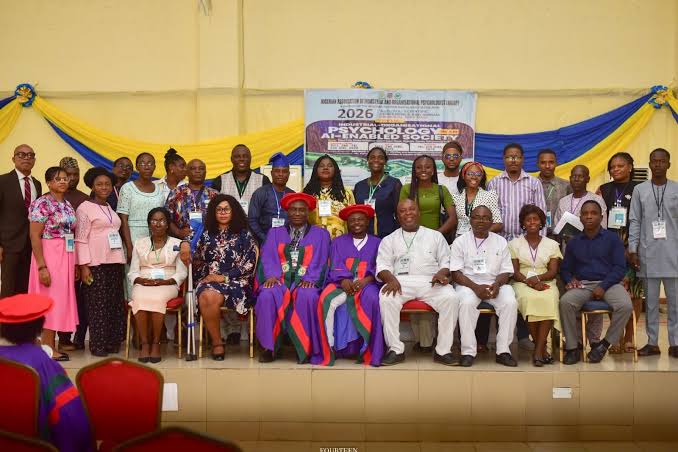
Here is a breakdown of the structural blueprint proposed at the association's 2026 National Scientific Conference at the University of Ibadan.
Issuing a formal communiqué under the conference theme, *“Psychology in an AI-Enabled Society,”* NAIOP explicitly linked the "Japa" trend among healthcare workers to unsustainable working environments.
The psychologists stressed that the current productivity crisis across Nigerian public and private hospitals is fundamentally behavioral. Due to chronic staff shortages, remaining nurses face extreme overwork, resulting in severe burnout and a severe drop in affective commitment (emotional attachment to their workplace).
│ THE WORKPLACE CYCLE DRIVING MIGRAION │
└──────────────────┬───────────────────┘
│
┌─────────────────────────┼─────────────────────────┐
▼ ▼ ▼
┌─────────────────┐ ┌─────────────────┐ ┌─────────────────┐
│ POOR CONDITIONS │ │ SEVERE BURNOUT │ │ HIGH ATTRITION │
│Imbalanced nurse-│ ───► │Chronic physical │ ───► │Nurses choose to │
│patient ratios & │ │& emotional │ │emigrate for │
│overwhelming load│ │exhaustion. │ │professional relief│
To counter this destructive loop, NAIOP urged the Federal Government to prioritize immediate human resource interventions before imposing purely regulatory or restrictive guidelines. The primary focus must remain on:
*Balancing Nurse-Patient Ratios:* Actively hiring more qualified personnel to align with international health benchmarks.
*Reducing Workloads:* Eliminating administrative bottlenecks that split a nurse's attention away from critical patient care.
Crucially, the psychologists highlighted that AI should not be viewed as a tool to replace human personnel, but as a digital co-pilot specifically designed to mitigate exhaustion.
The association's roadmap advises the Ministry of Health and hospital administrations to utilize AI for three specific operational tasks:
| AI Action Item | Practical Deployment | Psychological & Workplace Benefit |
| *Routine Automation* | Offloading data entry, filing medical charts, and scheduling. | Keeps nurses focused purely on clinical work instead of paperwork. |
| *Advanced Analytics* | Monitoring patient vitals and warning signs via predictive algorithms. | Lowers clinical anxiety and reduces decision fatigue during long shifts. |
| *Hybrid System Guardrails* | Building virtual tracking structures to monitor nurse shift patterns. | Flags early signs of burnout to ensure fair rotation schedules. |
The communiqué further cautioned that introducing software without a human-centric framework creates cultural resistance and lower morale. NAIOP stated that employers must establish clear ethical guidelines to ensure transparency, algorithmic fairness, and overall psychological safety for medical workers handling new tools.
Furthermore, the association challenged academic institutions and universities to immediately overhaul their training programs by embedding AI literacy, digital ethics, and human-AI collaboration protocols straight into the mainstream nursing and organizational psychology curricula.
Technology alone cannot reverse Nigeria’s medical brain drain. NAIOP's data highlights that the path forward requires a unified approach: modernizing the clinic floor with smart automation, while simultaneously providing the competitive salaries, balanced workloads, and healthy environments that professionals require to build lifelong careers at home.
To understand more about the structural struggles faced by these medical professionals, this field report on the [challenges of the nursing profession in Nigeria](https://www.youtube.com/watch?v=9Xfz-NL6uRQ) highlights the demands being made to curb the ongoing migration trend.