
13.5m children miss vaccines in 2025 – WHO, UNICEF
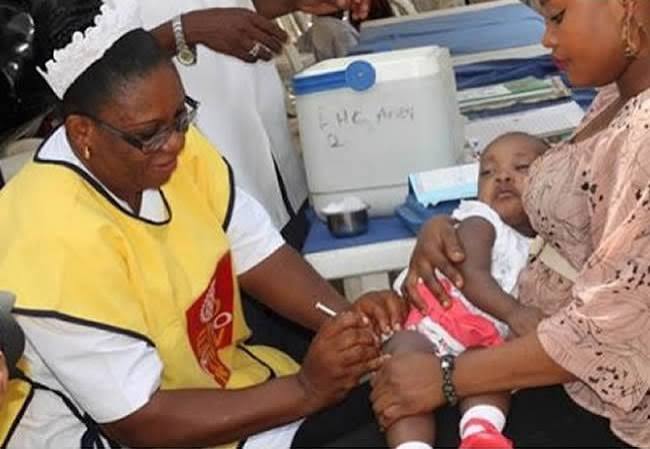
The World Health Organization and the United Nations Children’s Fund have reported that approximately 13.5 million infants did not receive any vaccinations during their first year of life, despite a modest increase in global childhood immunization coverage in 2025.
The United Nations agencies cautioned that, although there was a reduction of nearly 750,000 in the number of "zero-dose" children compared to the previous year, the increasing number of children who initiate but do not complete their vaccination schedules poses a significant threat to global efforts aimed at preventing disease outbreaks.
According to the most recent WHO-UNICEF Estimates of National Immunization Coverage published on Tuesday, 90 percent of infants worldwide, which equates to nearly 116 million children, received at least one dose of the diphtheria, tetanus, and pertussis vaccine (DPT) in 2025. Furthermore, 85 percent, or about 110 million infants, completed the recommended three-dose series.
The report indicated that while both metrics improved by one percentage point compared to 2024, global vaccination coverage still falls short of the pre-COVID-19 pandemic levels recorded in 2019 and has remained relatively stagnant for over a decade.
The agencies disclosed that an estimated 13.5 million children did not receive any vaccinations during their first year of life in 2025.
They clarified that although the number of zero-dose children decreased by nearly 750,000 from the previous year, this progress was compromised by an increasing number of children who began immunization but did not finish the schedule.
The report further revealed that approximately 7.3 million infants received the first dose of the DTP vaccine but did not proceed to receive their first measles vaccine.
The agencies warned that this situation has contributed to stagnation in measles vaccination coverage, with only 84 percent of children receiving the first dose of the measles-containing vaccine and 77 percent receiving the second dose, both significantly below the 95 percent coverage required to avert outbreaks.
In 2025, 57 countries faced significant or disruptive outbreaks of measles.
According to UNICEF, Nigeria currently has the highest number of unvaccinated children globally, with over two million children who have not yet received a single dose of any routine vaccine.
Dr. Tedros Adhanom Ghebreyesus, the WHO Director-General, emphasized that vaccines are among the most effective public health measures available.
"Every child, regardless of their circumstances—be it wealth or poverty, peace or conflict—deserves the lifesaving protection that vaccines offer.
"Immunization stands as one of the most cost-effective, equitable, and dependable methods for safeguarding the health and well-being of children.
"Our greatest security starts with ensuring that every individual, no matter where they reside, is shielded from the deadly diseases that vaccines can prevent," he stated.
Catherine Russell, the UNICEF Executive Director, noted that while vaccination rates have rebounded from the significant declines seen during the COVID-19 pandemic, millions of children are still unvaccinated.
"Governments and health workers have contributed to the recovery of global vaccination rates after a notable drop during the COVID-19 pandemic.
"However, millions of vulnerable children remain unprotected due to factors such as conflict, displacement, and poverty. It is imperative that we reach every child and restore trust where it is diminishing. No child should endure a disease that a simple vaccine can avert," Russell remarked.
The report indicated that 100 countries have sustained at least 90 percent coverage with three doses of the DTP vaccine since 2019.
Nevertheless, among the countries that fell below this threshold prior to the pandemic, only 30 have shown improvement in their vaccination rates over the past six years, while 65 countries have either stagnated or seen a decline in coverage, including 13 countries that are fragile, conflict-affected, or vulnerable.
Regionally, both the Americas and South-East Asia have either returned to or surpassed their pre-pandemic vaccination rates, with South-East Asia standing out as the top-performing region.
While Africa, the Eastern Mediterranean, and Europe saw improvements last year, their vaccination coverage still lags behind 2019 levels, and the Western Pacific region has experienced further declines.
The agencies reported that over half of the world's zero-dose children reside in fragile, conflict-affected, and vulnerable environments, despite these children representing only about one-third of the global child population.
The report indicates that immunization programs in these areas continue to face challenges due to insecurity, political instability, and chronic underfunding. It highlighted Syria, where DTP1 coverage decreased by six percentage points and measles vaccine coverage dropped by 12 percentage points within a single year.
Conversely, Sudan achieved the most significant improvement in vaccination coverage in 2025, with first-dose DTP coverage increasing by 35 percentage points and first-dose measles vaccine coverage rising by 22 percentage points.
The report also pointed out that vaccine hesitancy and diminishing political commitment are impacting immunization efforts even in more affluent nations.
For example, South Africa's first-dose DTP coverage has decreased by 20 percentage points since 2019 and continued to decline in 2025, while Bosnia and Herzegovina experienced a 23-point drop in first-dose measles vaccination after making considerable progress in 2024.
The agencies emphasized that sustained investments over the last 25 years have led to a 40 percent reduction in the number of zero-dose children globally, with countries supported by Gavi, the Vaccine Alliance, now achieving an average coverage of 74 percent across the complete schedule of WHO-recommended vaccines.
Dr. Sania Nishtar, Chief Executive Officer of Gavi, stated that these achievements illustrate the potential of global collaboration but cautioned that funding challenges could jeopardize future advancements.
The unprecedented levels of immunisation observed in lower-income countries demonstrate the potential outcomes achievable when all parties collaborate towards a common goal.
"As Gavi embarks on a new five-year phase, our significant challenge will be to sustain this progress amidst funding limitations, geopolitical instability, and rising outbreaks, while intensifying efforts to reach the children who still lack access to immunisation," she stated.
The WHO and UNICEF have also cautioned that recent reductions in international health funding are starting to undermine immunisation monitoring systems.
They highlighted that only 18 national immunisation surveys were conducted and submitted in 2025, a decrease from 50 in 2024, warning that the deterioration of surveillance systems could hinder the identification of unvaccinated children and elevate the risk of preventable disease outbreaks and fatalities.
The agencies urged governments and development partners to enhance immunisation services in vulnerable settings, combat vaccine misinformation, boost both domestic and international funding for vaccination initiatives, and invest in more robust disease surveillance and data systems to ensure the continuity of global immunisation efforts.