

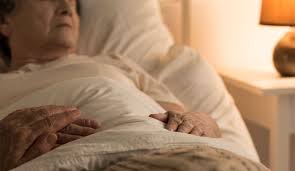
Senior citizens’ deaths rise as families turn to unregulated caregivers
On a chilly yet sunny afternoon in May 2025, while in Sicily, Italy, Olatayo received a call from Nigeria that did not initially appear to be an emergency.
Her father, Odumosu Oladejo, had consistently seemed robust for his age. At 72, he was still capable of bathing independently, performing his daily prayers, and managing his hypertension and diabetes with assistance from his daughter living abroad.
However, within a few days, what began as a seemingly minor health concern for the septuagenarian from Ogun State escalated into a fatal situation.
Olatayo recounted that she promptly directed his caregiver to take him to the hospital upon learning of his ill health.
“Instead, the caregiver I had entrusted with his well-being invited an auxiliary nurse to the home contrary to my instructions. There was no accurate diagnosis or comprehensive medical assessment; the nurse merely administered drips and medications without grasping the underlying issue,” she stated.
Unbeknownst to Olatayo at that moment, her father had missed essential medications necessary for managing his chronic ailments.
His nutrition had become erratic, and his medications were not consistently administered due to the caregiver’s inadequate service.
To make matters worse, the reality of his declining health was hidden from Olatayo.
By the time she was notified that a family member needed to be present in person, it was already too late.
“He passed away within a week of the initial call. He succumbed to a poorly managed chronic condition, despite having access to medications and resources. I continue to hold myself responsible for his death,” she expressed.
Died in solitude
The evening was tranquil in November 2025, characterized by a stillness that envelops neighborhoods long after the day's activities have subsided.
Within her residence in Ibadan, Oyo State, a retired educator, Oluwole Aderemi, found herself alone, as she had on numerous previous nights. However, on this particular evening, a medical crisis unfolded quietly.
Those familiar with the 74-year-old portrayed her as disciplined and knowledgeable, a woman who dedicated decades to shaping minds within lecture halls.
In her retirement, she maintained her independence, overseeing her health with the assistance of a part-time caregiver after her children moved abroad. Yet, age and illness frequently necessitate more than standard care.
"She experienced severe hypoglycaemia. During episodes of hypoglycaemia, she was advised to consume a glass of Coke or three sugar cubes to stabilize her condition," a relative stated.
Hypoglycaemia, a condition characterized by dangerously low blood sugar levels, often necessitates immediate action. For many patients, consuming sugar quickly can alleviate symptoms within moments.
However, in Aderemi's situation, time was not on her side.
"She had the episode around 10 pm. Regrettably, due to her living alone, she was unable to access the kitchen for the Coke or sugar, and subsequently, she passed away.
She died because there was no one present to assist her. Her children resided abroad, and the caregiver did not stay with her full-time," the relative continued.
The deaths of Oladejo and Aderemi are not singular tragedies. Their narratives highlight an increasing reality in numerous Nigerian households, where elderly individuals are left to confront serious health issues in isolation.
Growing Elderly Population
Nigeria currently has approximately 10 million individuals aged 60 and above, with around 6.5 million being over 65 years old, as per a 2022 estimate from the World Bank.
Projections from the National Senior Citizens Centre indicate that the nation is home to over 14.8 million individuals aged 60 and older, which constitutes about five percent of the total population.
For many years, the care of the elderly in Nigeria was firmly anchored in robust family structures, where children and extended family members offered daily assistance and companionship.
However, this framework is gradually deteriorating, leading to a decline in the living and health conditions of numerous senior citizens.
Research has shown that an increasing number of elderly individuals across the nation are now living independently, frequently without reliable caregivers.
Experts attribute this change in part to migration, as younger family members move abroad or relocate to urban areas in pursuit of better opportunities.
The evolving family dynamics have resulted in significant voids in the traditional support systems that previously catered to older individuals.
For elderly individuals suffering from conditions such as diabetes, hypertension, and cognitive decline, regular monitoring is often crucial, a necessity that becomes challenging to fulfill when they reside alone.
Adding to the difficulty is the limited availability of organized elderly care services.
The World Health Organization highlights that older individuals living alone face a greater risk of delayed treatment, medication errors, falls, and complications from chronic diseases due to the lack of immediate support.
Currently, Nigeria has only a handful of operational geriatric centers, while home-based care provided by part-time caregivers remains predominantly informal, unregulated, and often unreliable for an aging population with intricate health requirements.
Consequently, minor medical emergencies are increasingly becoming fatal.
A 2024 study published in the journal Geriatrics found that about 65 per cent of older Nigerians with functional limitations reported unmet needs in activities of daily living.
Systemic gap
Healthy ageing plays a crucial role in achieving Sustainable Development Goal 3, which focuses on good health and well-being.
Across Africa, the number of elderly people is projected to rise from about 41 million in 2025 to over 100 million by 2050.
With Nigeria’s ageing population expected to grow significantly, experts warn that age-related non-communicable diseases and other illnesses will place additional pressure on the country’s already strained healthcare system.
Infrastructure challenges remain widespread, as most primary healthcare centres are not designed to accommodate elderly patients.
Findings by PUNCH Healthwise showed that many facilities lack basic features such as ramps, suitable seating arrangements, and systems tailored to the needs of older persons.
There is also a shortage of trained geriatric specialists, with only a few teaching hospitals offering structured elderly care programmes.
Although the Federal Government approved the National Policy on Ageing on February 10, 2021, during the administration of former President Muhammadu Buhari, with the aim of improving the welfare of older persons, five years later, the policy has yet to be fully implemented.
There are 15 focus areas in the national policy, covering health and long-term care, food and nutrition, emergencies and epidemics, and ageing and disabilities, among others.
While the National Senior Citizens Centre, a Federal Government agency under the Ministry of Humanitarian Affairs, Disaster Management and Social Development, was established to drive the policy and improve the quality of life of older citizens, full implementation, particularly in healthcare, remains largely in progress.
Dying from preventable causes
She died in silence, the kind of death that was preventable.
After retirement, 78-year-old Blessing Okojie’s once-busy life revolved around careful routines and the management of her diabetes and hypertension.
Earlier in life, Okojie built a career defined by service and structure, rising through the ranks to become a permanent secretary in one of the South-East states. In retirement, however, that structure gradually faded.
Her two children had relocated abroad, and like many elderly Nigerians, she relied on a caregiver who came during the day and left in the evening.
That arrangement worked until it didn’t. On a particular day in June 2024, she developed diarrhoea, a condition that can quickly weaken elderly people, especially without supervision or immediate medical care.
“She was stooling, but the caregiver thought she had done all she could and had to leave around evening,” a relative told PUNCH Healthwise.
Alone and growing weaker through the night, she struggled repeatedly to reach the toilet. With each trip, her strength gradually faded.
“On one of her repeated trips to the toilet, the old woman fell and remained in the same spot till the following morning. By the time she was found, she was lying in a pool of her own stool, dead,” the relative said.
What could have been a manageable illness turned fatal because help was absent at a critical moment.
“If there had been someone with her overnight, she wouldn’t have died. It was really heartbreaking,” the relative added.
Living in the past
Inside his quiet home in Osun State, where routines once flowed naturally, Ikuforiji Adewunmi now lives in fragments of time.
The 67-year-old retired policeman, once known to his children, had gradually faded into a version shaped by me