

Groundbreaking T-Cell Engager Therapy Challenges Solid Tumor Resistance at ASCO 2026
CHICAGO — In what is being hailed as a historic milestone for clinical oncology, researchers at the American Society of Clinical Oncology (ASCO) annual meeting have unveiled definitive proof-of-concept data showing that next-generation Bispecific T-Cell Engagers (TCEs) can successfully dismantle advanced solid tumors.
The landmark clinical trial evaluated IMA401, an engineered bispecific molecule that bypasses the classic roadblocks that have rendered traditional immunotherapies ineffective against solid cancer masses.
Breaking Through the "Cold" Tumor Wall
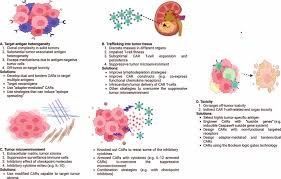
Historically, standard immunotherapies like checkpoint inhibitors have excelled at treating "liquid" blood cancers but have hit a brick wall when facing solid tumors (such as advanced lung, head and neck, or colorectal cancers). Solid tumors create an immunosuppressive microenvironment—effectively a physical and chemical shield—that stops the body's defensive T-lymphocytes from recognizing or entering the mass.
IMA401 fundamentally rewrites this dynamic by acting as a mechanical, molecular bridge:
$${\text{IMA401 Molecule}} \Longrightarrow \underbrace{\text{Binds to Tumor Antigen}}_{\text{Arm A}} + \underbrace{\text{Binds to T-Cell Receptor (CD3)}}_{\text{Arm B}}$$
By forcing a direct physical connection, the therapy entirely bypasses the tumor’s ability to hide, triggering the T-cell to release lethal perforins and granzymes directly into the cancer cell.
Clinical Metrics & Tolerability
The data, simultaneously published in Nature Medicine, followed a cohort of heavily pretreated patients who had exhausted all conventional treatment options:
Target Cancer Group Clinical Observation Response Status
Head & Neck Cancers Significant, measurable tumor shrinkage in 4 out of 14 optimal-dose patients Remission ongoing at time of analysis
Lung & Melanoma Tumors Confirmed positive anti-tumor responses and stabilized disease progression Advancing to Phase Ib expansion trials
The treatment demonstrated a highly manageable safety profile. While Cytokine Release Syndrome (CRS)—a rapid systemic inflammatory response triggered by immune activation—occurred in 38% of patients, the episodes were overwhelmingly restricted to mild Grade 1 or 2 fevers.
Oncologists on the floor are calling this a structural shift in targeted oncology, transitioning T-cell engagers from a niche treatment for leukemia into a broad-spectrum weapon against the hardest-to-treat solid masses in medicine.
To gain insight into the practical implications of these regulatory actions on weight-loss treatments, you can view this Clinical Interview on FDA GLP-1 Compounding Restrictions. This video features a practicing nurse practitioner discussing how the bulk list exclusions will alter daily pharmacy operations and impact patient options.