
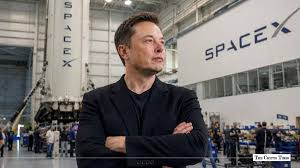
SPACEX IPO POP MINTS ELON MUSK AS WORLD’S FIRST TRILLIONAIRE
The global financial architecture entered unchartered territory this morning following the historic public debut of SpaceX on the Nasdaq. In what is officially recorded as the largest Initial Public Offering (IPO) in human history, the aerospace and artificial intelligence giant saw its shares surge nearly 20% on its first day of trading, pushing the company’s market valuation past a staggering $2.1 trillion.
The blockbuster debut has officially propelled founder and majority shareholder Elon Musk into the history books as the world’s first validated trillionaire, with personal wealth now estimated by Forbes at $1.1 trillion.
Trading activity was nothing short of manic, with more than $80 billion in shares changing hands on day one. Underwriters, led by Goldman Sachs and Morgan Stanley, reported that institutional and retail demand was heavily oversubscribed, drawing over $100 billion in orders from everyday traders alone.
In an unprecedented move, global index providers (including Nasdaq, FTSE, and MSCI) have fast-tracked SpaceX into their major benchmarks. This means millions of ordinary retirement accounts and pension funds will automatically absorb the stock over the next two weeks
While Musk celebrated the milestone at Starbase, Texas, stating the capital would fund a "1-million-strong colony on Mars and orbital AI data centers," economic analysts are waving yellow flags
Prominent wealth economists have voiced deep concerns regarding the extreme consolidation of global capital, drawing parallels to the Gilded Age robber barons. Furthermore, critics point to an incredibly lax corporate governance structure: Musk commands roughly 85% of SpaceX’s voting shares, meaning public investors are heavily tied to the volatile decisions of a single individual. The company must also use a portion of the IPO proceeds to service a massive $20 billion bridge loan tied to its recent merger with xAI and social media platform X.