
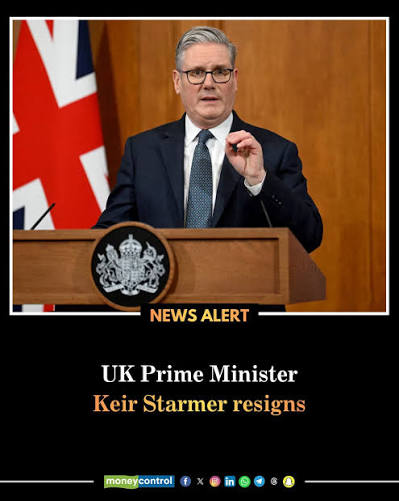
UK PM Keir Starmer resigns
British Prime Minister Keir Starmer announced his resignation on Monday after serving less than two years in office, a term marked by policy reversals and significant public discontent.
"Every decision I have made has been focused on prioritizing the country I cherish. Therefore, I will step down as leader of the Labour Party," Starmer stated, visibly emotional during his speech outside 10 Downing Street.
Starmer indicated that the process to select a new leader for the centre-left party would commence in July, and he would continue as prime minister until a successor is appointed, ensuring they are in place before parliament reconvenes after the summer break in September.
Starmer's principal competitor, seasoned politician Andy Burnham, is set to be sworn in as a member of parliament on Monday following his victory in a significant special election on Thursday, which enables his return to parliament and paves the way for his candidacy for party leader.
"I will remain in my role as prime minister until the leadership contest concludes, and I will do everything possible to facilitate a smooth transition of power," Starmer remarked.
Until the weekend, Starmer had maintained that he would continue to fight and stay as prime minister despite facing challenges and calls for his resignation.
He has held onto this stance for several months amid numerous scandals and prominent resignations that intensified the pressure on him and his Labour Party.
However, Britain is now poised to welcome its seventh prime minister in a decade.
Starmer's much-anticipated announcement arrives just a day before the tenth anniversary of the Brexit referendum, which initiated the UK's departure from the European Union and an unprecedented turnover of prime ministers.
Starmer has been recognized for transforming Labour into a party capable of winning elections, achieving a significant victory in 2024 that ended 14 years of Conservative governance.
However, his tenure was disrupted by various missteps, including cuts to benefits and backlash regarding defense spending proposals.
In March, he faced the threat of being removed from office due to his controversial choice to appoint Peter Mandelson, a known associate of the late US sex offender Jeffrey Epstein, as the UK ambassador to Washington.
Additionally, he has encountered challenges in countering the swift ascent of the far-right, anti-immigration Reform UK party, which triumphed over Labour in local elections in May, further undermining Starmer’s standing.
In his resignation address, Starmer stated, "I will also extend my complete and unwavering support to my successor, confident that they will take over a Britain that is significantly stronger and fairer than the one I received two years ago."