
US Deports 25,000 To Developing Countries Under Secretive Deals – Report
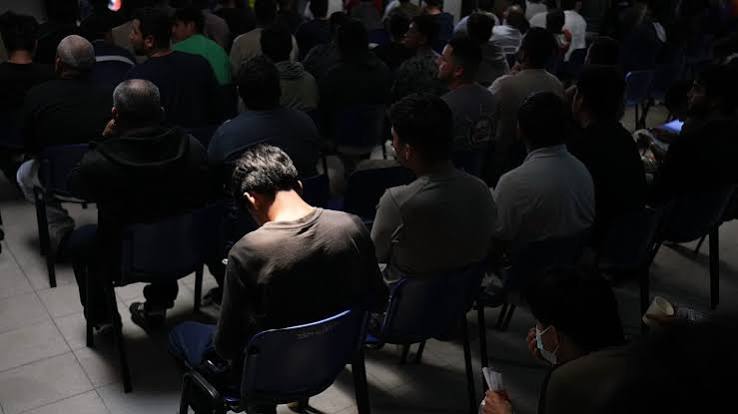
The United States has executed deportations of more than 25,000 individuals pursuant to confidential agreements established with 35 nations to accept migrants lacking any connection to those countries, as revealed by an investigation released Monday.
Following US President Donald Trump's assumption of office in January 2025, Washington has been establishing agreements with developing nations to accept migrants who cannot be lawfully returned to their home countries.
The investigation conducted by Forbidden Stories determined that the administration has allocated $410 million for direct payments to recipient countries or to United Nations agencies to facilitate these returns.
According to data compiled by Forbidden Stories in collaboration with an international consortium of journalists, a minimum of 25,447 individuals had been deported to third countries by August 31, 2026.
The preponderance of deportees—approximately 20,000—were transferred to Mexico, with the remainder distributed among 27 additional countries spanning Latin America, Africa, and the Pacific region, and agreements have been concluded with seven additional nations.
The agreements contain varying provisions, including specifications regarding which nationalities may be deported and whether individuals with criminal histories may be accepted.
A prior investigation by AFP this year established that Washington employs visa restrictions and sanctions against African nations to compel their acceptance of deportees.
Legal professionals informed AFP that deportees were being subjected to a "legal void," detained without formal charges in nations where they maintain no connections and possess minimal or no legal protections.
Forbidden Stories reported that 49 of Africa's 54 nations had been solicited regarding the acceptance of third-country deportees.
The Office of Remigration, a relatively obscure State Department division established in May 2025, has administered the majority of negotiations and financial transfers, according to Forbidden Stories.
The office is directed by Christian Jove Ehrhardt, a 41-year-old diplomat with prior experience as a security officer.
The report documents his visits to Cameroon, which executed a memorandum of understanding with the United States in December concerning the acceptance of deportees. Subsequently, Cameroon also executed a five-year health assistance initiative valued at nearly $400 million.
The following month, the State Department said it would provide a further $30 million to the UN Refugee Agency (UNHCR) in Cameroon to “facilitate the voluntary return of refugees and combat illegal immigration.”
The inaugural aircraft transporting individuals subject to deportation arrived in Cameroon on January 14.
Financial Compensation
Several agreements have included monetary transfers directly to governmental entities.
Palau, a diminutive Pacific island state with fewer than 18,000 inhabitants, executed an agreement in December 2025 to receive up to 75 nationals from third countries in exchange for $7.5 million.
Nevertheless, merely three individuals have been transferred pursuant to this agreement to date.
In Eswatini, 32 individuals have been received since July 2025 out of an authorized maximum of 160 under an agreement valued at over $5 million. The nation has received deportees possessing criminal histories, according to investigative findings.
Of the $410 million allocated for these agreements, confidential State Department documentation indicated that $81 million was designated for participating governments.
The remaining funds were designated for humanitarian organizations, including approximately $178 million for the United Nations' International Organisation for Migration, and $123 million for UNHCR.
These organizations have encountered scrutiny regarding their participation, although UNHCR communicated to Forbidden Stories that it was not a signatory to the bilateral agreements and that American financial support was being applied in accordance with its mandate to reinforce asylum frameworks.
An IOM representative communicated to Forbidden Stories that the organization's determinations regarding funding acceptance were predicated "on a singular criterion: whether our involvement will enhance the circumstances of the affected migrants. In these circumstances, we maintain firm conviction that it does."