

State police bill lands in state assemblies
On Wednesday, Nigeria advanced significantly towards the establishment of a state police force as the Senate approved the contentious Constitution Alteration Bill aimed at decentralizing policing. This pivotal reform now shifts to the 36 state Houses of Assembly, where a minimum of 24 legislatures must endorse the proposal for it to become law.
The Senate's approval of the bill represents a significant milestone in a discussion that has long dominated Nigeria's security landscape, particularly in light of the escalating insecurity across various regions of the country, which includes issues such as terrorism, banditry, kidnapping, communal violence, and organized crime.
This legislation intends to create state-controlled police services in addition to the existing Nigeria Police Force. The bill was passed after senators achieved the constitutionally mandated two-thirds majority through a manual voting process, necessitated by technical difficulties that impacted the electronic voting systems in the chamber.
With both chambers of the National Assembly now in support of the proposal, focus has shifted to the state assemblies, whose endorsement will ultimately decide if Nigeria will move away from its historically exclusive federal policing framework.
The proposed amendment is considered one of the most significant constitutional reforms since the return to democratic governance in 1999.
Central to this reform is a provision that grants governors the authority to appoint Commissioners of Police for their respective states, pending confirmation by the state Houses of Assembly.
According to Clause 17 of the proposed constitutional amendment, "while the Federal Police Service will continue to be led by the Inspector-General of Police, each State Police Service shall be directed by a Commissioner of Police appointed by the governor and confirmed by the state legislature."
The initiative effectively establishes a dual policing framework wherein state police units will operate alongside federal law enforcement agencies.
The Senate ratified the legislation following the evaluation of the report from the Senate Committee on the Review of the Constitution, which was presented by Deputy Senate President and committee chairman, Barau Jibrin.
Initially, the provisions of the bill were examined by the Committee of the Whole, after which lawmakers approved them and moved on to a final vote.
During the discussion on the legislation, Senate Leader, Senator Opeyemi Bamidele, characterized the proposal as a meticulously crafted framework designed to balance local policing independence with national unity.
“The legislation aims to maintain the Nigeria Police Force for federal law enforcement responsibilities while allowing for the creation of state police services in states that opt to implement them,” he remarked.
Bamidele clarified that the proposed framework distinctly outlines the duties of both federal and state police services.
He noted that state police would be tasked with enforcing state laws, ensuring public safety and order, preventing and investigating crimes within their jurisdictions, safeguarding lives and property, and executing other local policing responsibilities.
He further explained that intervention would only take place in instances where there is a complete breakdown of public order in a specific subnational area; when state police are unable to operate; in cases of severe violations of fundamental rights; when there is a documented history of electoral intimidation; and when national security is jeopardized.
He stated that such intervention would necessitate written approval from the President and Commander-in-Chief and would be subject to Senate oversight and judicial review.
Safeguards
The clear delineation of powers was among several safeguards implemented by lawmakers to mitigate longstanding concerns regarding the potential misuse of state police formations by governors for political ends.
Indeed, concerns that state police might serve as tools of intimidation against opposition figures, critics, and civil society organizations have historically represented one of the most compelling arguments against decentralized policing.
To alleviate such worries, senators incorporated explicit anti-abuse clauses into the constitutional amendment.
A significant safeguard adopted by the Senate stipulates that "a state Commissioner of Police shall not arrest, detain, investigate, or use force against any individual, political party, or group solely for criticizing the government, except in accordance with the law."
This provision is anticipated to act as a constitutional barrier against politically motivated arrests and the misuse of power.
Furthermore, lawmakers suggested that the National Assembly should maintain the authority to establish minimum national standards concerning recruitment, training, vetting, promotion, discipline, use of force, firearms, complaint procedures, accountability mechanisms, data management, and professional conduct for state police services.
Bamidele stated that the proposed framework generally aims "to balance local policing autonomy with national unity, accountability with operational efficiency, and federal oversight with state responsibility."
"The bill offers strong protections against abuse, maintains federal authority where necessary, safeguards constitutional rights, and establishes a modern policing framework capable of addressing current security challenges."
The proposal for state police has remained one of the most debated constitutional matters since the beginning of the Fourth Republic.
Various administrations, constitutional conferences, security experts, and governors have consistently advocated for this idea, contending that Nigeria's highly centralized policing system has become increasingly insufficient for a federation of over 200 million people.
Supporters assert that locally recruited officers would have a superior grasp of their surroundings, language, culture, and security dynamics, which would enhance intelligence gathering and crime prevention.
They further argue that state governments, which already allocate billions of naira to support federal security agencies, should gain increased authority over policing within their jurisdictions.
Conversely, critics caution that influential governors might utilize state police to settle political disputes, intimidate adversaries, and sway elections.
Such concerns have frequently hindered past efforts to amend the Constitution.
The Senate's approval on Wednesday thus marks a significant political achievement.
The importance of this event was highlighted by the atypical voting method employed by lawmakers.
Initially, the Senate was anticipated to utilize electronic voting for the constitutional amendment process.
However, technical issues with certain voting devices compelled lawmakers to abandon this approach in favor of manual voting.
During the proceedings, Bamidele proposed that every senator should have the chance to partake in this historic vote.
He stated, "Instead of proceeding with electronic voting, which would disenfranchise some of our colleagues whose machines are malfunctioning, I propose that we allow every distinguished senator to respond to their father's name through manual voting."
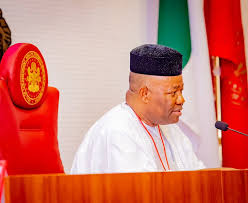
Senate President Godswill Akpabio supported this motion.
"For the sake of transparency, and to ensure that constituents are aware of your stance on every issue, it is beneficial for us to engage in manual voting," Akpabio remarked.
After the motion was accepted, senators were called individually to publicly express their positions during the clause-by-clause review of the constitutional amendment bills.
To streamline the process, the Senate suspended the relevant sections of its Standing Rules via a voice vote.
Speaking during an interview on Frontline, a current affairs programme on Eagle 102.5 FM, Ilese-Ijebu, Ogun State, Alapinni urged Nigerians to embrace the initiative.
“I’m not saying it has failed. It has not failed. But people are clamoring to see that things could be better. There’s always room for improvement in anything. So, if there’s room for improvement, there’s room for state police. That’s the way I look at it,” he said.
According to him, Nigeria’s security challenges require fresh approaches.
“The security situation, in the country calls for doing same thing in a different manner and I think the introduction and the clamour for state police is a welcome development, nothing ventured, nothing gained. If we explore it and see how it works, no matter what, we stand to benefit from it. Forget about the pros and the cons. We have lived over the years with entry policing,” he said.
Alapinni dismissed concerns that issues relating to funding and training could halt the reform.
“The issue of funding and lack of training or retraining has been part of the malaise that has been affecting the constitutional responsibility of policing in the country.
“Whether funding or no funding, we have to look at it from the angle of what can we do to make police solid. And I think the present inspector-general of police is trying to do his best by giving directives and that’s okay,” he stated.
T