
Nigerian survivors rescued from sex slavery recount Côte d’Ivoire ordeal
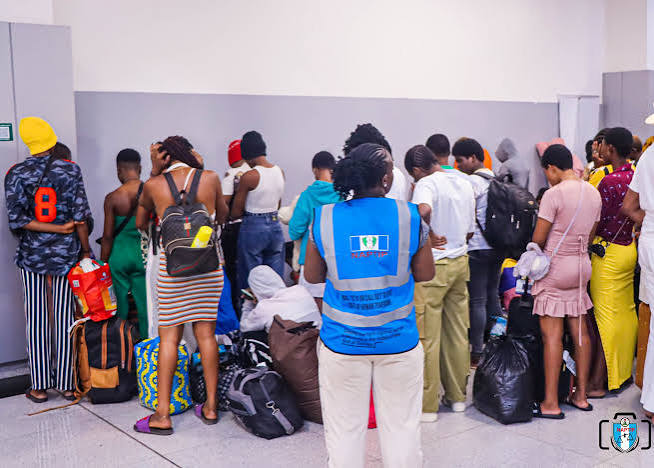
In the late hours at Murtala Muhammed International Airport in Lagos, a chartered flight touched down carrying 78 traumatized survivors—including underage girls and babies—rescued from a sprawling human trafficking network in Côte d’Ivoire.
The group, comprising 75 females aged between 13 and 30, three infants, and two young males, stepped off the aircraft bearing physical and psychological scars of severe exploitation. Officials confirmed that four of the rescued minors were pregnant upon their return.
The repatriation, spearheaded by the National Agency for the Prohibition of Trafficking in Persons (NAPTIP) in partnership with airline operator Air Peace, marks one of the most significant recent crackdowns on West Africa’s cross-border sex-slavery rings.
For most of the victims, the ordeal began in rural and semi-urban communities across Nigeria, particularly in Edo, Delta, Kogi, and Plateau states. Promised lucrative opportunities abroad as boutique assistants, hairdressers, or domestic staff, the young women were lured into joining recruiters for what they believed was a path out of poverty.
Instead, they were smuggled overland through Benin, Togo, and Ghana into Côte d’Ivoire. Upon arrival in cities like Abidjan and San Pédro, their passports and phones were confiscated, and they were presented with exorbitant, arbitrary "debts"—often ranging between 1.5 million and 3 million CFA francs (approx. $2,600–$5,000 USD)—for travel expenses.
"When we got there, the madam handed us condoms and told us what our actual job was. When I refused, they locked me in a room, starved me for days, and beat me until I yielded. Human life is worth nothing in the hands of those madams over there. I saw hell."
Clara (name changed to protect identity), 19-year-old survivor.
Trapped in crowded brothels and makeshift safehouses, the victims were subjected to forced prostitution. Daily earnings were seized under the guise of debt servicing, while arbitrary fines for minor infractions ensured the victims remained perpetually indebted.
Survivors recounted living under constant surveillance, emotional degradation, and physical violence. Many were forced to service dozens of clients daily without protection, leading to unwanted pregnancies, sexually transmitted infections, and severe malnutrition.
"They monitored every move we made. If a girl tried to escape or complained, the beatings became merciless. Some girls didn't survive the conditions; they just disappeared."
Sofia, 22, rescued survivor
The trade has expanded rapidly in recent years, driven by regional economic hardship and sophisticated online recruitment tactics through social media platforms.
The public outcry surrounding the plight of Nigerian girls stranded in West African sex hubs intensified after whistleblowers and local community leaders raised alarms, prompting swift diplomatic and security intervention.
NAPTIP operatives, working alongside Ivorian law enforcement and regional intelligence networks, launched coordinated raids. Prior to the evacuation flight, NAPTIP officers arrested two high-profile ringleaders operating from a heavily fortified mansion in the Lugbe district of Abuja.
RESCUE & RETURN SUMMARY │
• Total Evacuated: 78 individuals (75 females, 3 babies, 2 males)
• Age Range: 13 – 30 years old
• Medical Status: Severe trauma, malnutrition; 4 minors pregnant
• Key Interventions: Free airlift & medical aid by Air Peace
• Next Steps: Psychosocial support, profiling, skill training
Receiving the victims at Murtala Muhammed International Airport, the Director-General of NAPTIP, Binta Adamu Bello, affirmed the government's resolve to dismantle trafficking networks:
"To the young women and girls who have just returned: welcome home. You were taken far from the safety and dignity you deserve, but today you are on home soil and you are not alone. To those who perpetuate this evil, let this be a reminder that Nigeria will pursue justice relentlessly. There is no hiding place for traffickers."
Air Peace Chief Executive Officer, Allen Onyema, who sponsored the evacuation charter and medical care, called for stronger community vigilance and private-sector support to eradicate human trafficking in West Africa.
The rescued survivors have been moved to secure NAPTIP rehabilitation facilities. There, they are receiving:
Medical & Psychiatric Care: Emergency medical screenings, prenatal care for pregnant minors, and trauma-informed psychological counseling.
Investigative Profiling: Detailed debriefing sessions to gather intelligence on remaining syndicate leaders across Nigeria and Côte d’Ivoire.
Skill Acquisition & Livelihood Support: Vocational training programs designed to foster financial independence and prevent re-trafficking upon reintegration.
While civil society organizations welcome the return of the 78 survivors, anti-trafficking advocates stress that thousands of young African women remain trapped in similar conditions across West and North Africa. They are calling for tighter border controls, harsher penal sanctions for traffickers, and grassroots educational campaigns to curb predatory recruitment.