
FG budgets nearly N1tn for empowerment, SUVs amid rising borrowing pressure
The Federal Government has allocated N962.83 billion for the acquisition of Sport Utility Vehicles and empowerment initiatives in the 2026 Appropriation Act, a figure that surpasses the total funding for seven major federal ministries, as revealed by a budget review conducted by the civic technology organization, Tracka.
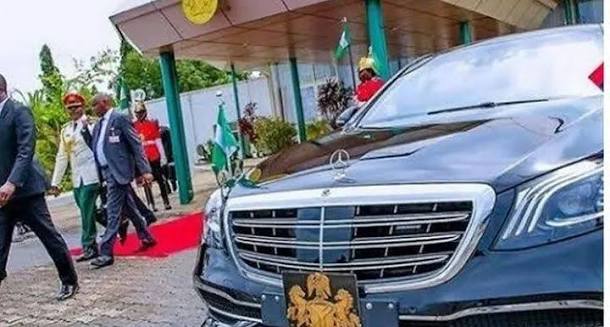
In its examination of the 2026 Federal Government budget, Tracka reported that this allocation includes N15.13 billion for the purchase of 39 SUVs and N947.70 billion for 2,579 empowerment projects, culminating in a total of N962.83 billion.
The civic organization highlighted that this amount exceeds the combined N960.27 billion allocated to the Federal Ministries of Industry, Trade and Investment; Housing and Urban Development; Women Affairs; Justice; Livestock Development; Aviation and Aerospace Development; and Petroleum Resources.
As per the group's findings, the Ministry of Industry, Trade and Investment received N156.8 billion in the 2026 budget, Housing was allocated N145.3 billion, Women Affairs N169.39 billion, Justice N150.7 billion, Livestock Development N177.6 billion, Aviation and Aerospace Development N87.3 billion, while Petroleum Resources received N73.1 billion.
Tracka raised concerns regarding the perceived lack of transparency associated with many of the empowerment projects.
It noted, "However, only 70 out of the 2,579 empowerment projects have clearly defined implementation locations."
The organization contended that this lack of clarity raises significant accountability issues related to project execution and oversight.
It questioned, "How can citizens monitor projects that lack specified locations? How can oversight bodies confirm implementation? How can taxpayers ascertain who ultimately benefits from these funds?"
In addition to the absence of project locations, Tracka pointed out that the projects are distributed among 184 implementing agencies, including various institutions whose official mandates do not typically encompass empowerment programs.
“Experience over the years has shown that many poorly defined empowerment projects have become vehicles for political patronage, rewarding loyalists rather than delivering broad-based benefits to citizens. When projects have no clear location, no transparent beneficiary selection process, and are assigned to agencies without the appropriate mandate, public confidence is eroded, and accountability becomes difficult,” the organisation stated.
Tracka also linked its concerns to the Federal Government’s fiscal position, noting that the 2026 budget is expected to be financed largely through borrowing.
It said, “This concern is even more pressing given that the 2026 Budget is projected to be financed with a deficit of about 46 per cent. At a time when government is borrowing heavily to fund public expenditure, every naira should be directed toward investments with clear development outcomes, measurable impact, and value for money, not opaque allocations that citizens cannot effectively track.”
The organisation further called for greater transparency in future budget preparation and implementation.
According to Tracka, “A budget should not only allocate resources, it should also inspire public confidence. Every budget item should have a clear purpose, a defined location, an implementing agency with the legal mandate to deliver it, identifiable beneficiaries, and measurable outcomes.”
The Federal Government has revised its borrowing plan for 2026, increasing it to N29.20 trillion due to an expansion in the proposed budget size.
This new figure represents an increase of N11.31 trillion compared to the previous borrowing projection of N17.89 trillion outlined in the 2026 Abridged Budget Call Circular issued by the Federal Ministry of Budget and Economic Planning.
Research indicates that the total debt financing for 2026 is now estimated at N29.2 trillion, reflecting a significant upward adjustment as expenditures rise considerably beyond earlier forecasts. This expansion is attributed to a growing fiscal deficit, with total spending projected at N68.32 trillion and total revenues anticipated at N36.87 trillion, resulting in a deficit of N31.46 trillion.
In the first half of 2026, the Federal Government secured N5.08 trillion from the domestic bond market, representing a 77.8 percent increase from the N2.86 trillion raised during the same period in 2025, according to an analysis of the Debt Management Office auction results.
Dr. Muda Yusuf, the Chief Executive Officer of the Centre for the Promotion of Private Enterprise, previously cautioned that Nigeria must exercise caution to avoid undermining the fragile stability achieved in recent months.
He expressed concern that high deficits and escalating debt levels present a significant threat. Yusuf highlighted the risk of falling into a debt trap, stating, "we need to be concerned about debt sustainability" because "high levels of deficits and high levels of debt… can constrict the fiscal space and create a vicious cycle of debt."
He elaborated that Nigeria has only recently regained some macroeconomic stability, and any disruption could rapidly exacerbate inflation and exchange rate pressures.
According to him, “we already have a reasonable level of macroeconomic stability” and “once we lose that recovery… it will create even more problems because that is where the problem of inflationary pressure will come and that is where the pressure on the exchange rate will come.”
Yusuf said the government had claimed that revenue performance was improving and urged it to capitalise on these gains to cut the deficit rather than expand it. He argued that Nigeria must “leverage on the improved revenue situation to moderate the level of deficit and the level of debt exposure so that we don’t put at risk the macroeconomic stability that we have achieved.”
Former Vice President and African Democratic Congress presidential candidate, Atiku Abubakar, has challenged the Federal Government to explain what he described as an estimated N7.98tn oil revenue windfall, questioning why the administration continues to embark on massive domestic borrowing despite benefiting from crude oil prices far above the 2026 budget benchmark.
Atiku, in a statement issued on Sunday by his Senior Special Assistant on Public Communication, Phrank Shaibu, accused the Tinubu-led government of operating without fiscal transparency and discipline, insisting that Nigerians deserve a full account of revenues generated from higher international oil prices.
The former Vice President said the Federal Government had already raised about N5tn from the domestic bond market in the first half of 2026.
According to him, such aggressive borrowing would ordinarily be expected only when government revenues had fallen sharply.
“Nigerians deserve a full accounting of this windfall. Where has the money gone? Why is there no transparent disclosure of the proceeds from excess crude sales? Why is government borrowing heavily when oil revenues are significantly above budget projections?” the statement added.
Timi Frank, the former Deputy National Publicity Secretary of the All Progressives Congress, has recently voiced his concerns regarding the controversy surrounding the 2026 federal budget. He advocates for enhanced transparency, accountability, and more robust oversight in the management of public funds.
In his statement, Frank noted that the current public discourse regarding the budget has intensified scrutiny of government expenditures, highlighting the necessity for institutions tasked with public financial management to adhere to the principles of transparency and accountability.
He called upon the Federal Government to fortify accountability mechanisms in order to restore public trust in governance and to ensure the prudent management of public resources.
“The recent revelations and controversy surrounding the 2026 Federal Budget have further reinforced the widespread perception that this administration represents one of the most troubling governments in Nigeria’s recent history,” he said.
Frank added that allegations of inflated budgetary provisions and questionable expenditures had raised fresh concerns about the credibility of the budgeting process.
“Allegations of inflated budgetary allocations, fictitious projects and questionable expenditures have once again raised serious concerns about transparency, accountability and the stewardship of public resources,” he added.
The former APC spokesman also called on the National Assembly to discharge its constitutional responsibility of scrutinising government expenditure and providing effective oversight of the executive arm of government.
Sheriffdeen Tella, a Professor of Economics at Olabisi Onabanjo University, Ago-Iwoye, emphasized that empowerment expenditures must be designed to enhance domestic production instead of promoting imports.
In a Sunday interview, Tella remarked that allocating public funds for imported vehicles and empowerment items would restrict the economic advantages for Nigeria, especially during a period when the government is significantly dependent on borrowing to fund its budget.
While acknowledging that empowerment programs can aid in supporting livelihoods, Tella contended that the government should focus on prioritizing locally produced goods to ensure that the spending foster