

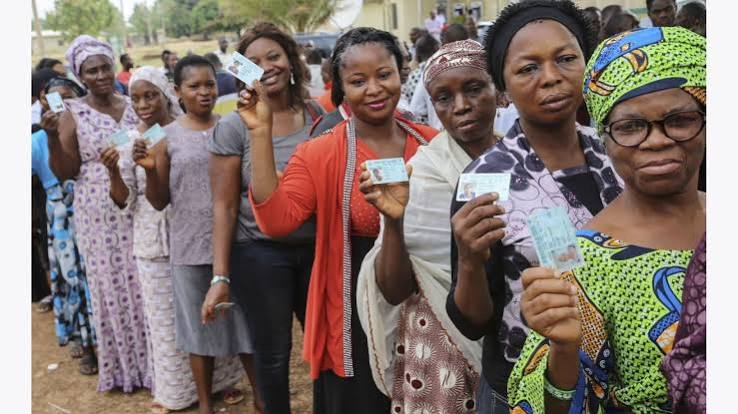
Voter apathy fears, hurdles persist amid 10m spike in registered voters
Nigeria's 103.4 million registered voters represent a substantial prospect for civic engagement through democratic processes; however, the nation's diminishing election participation rates present a pressing concern: what proportion of these citizens will exercise their voting rights in 2027?
Multiple challenges—ranging from security concerns and financial strain to skepticism regarding electoral bodies and political disengagement—may significantly influence whether millions of qualified citizens will proceed to cast their ballots or abstain from participating in the electoral system.
In announcing the substantial expansion of the voter registration rolls, Prof. Joash Amupitan, Chairman of the Independent National Electoral Commission (INEC), revealed that the North-West and South-West regions demonstrated the highest voter registration figures, whereas the South-East recorded the lowest. The commission established the 2026 national voter register at 103,428,715 individuals.
Amupitan, delivering the principal address at a strategic seminar convened by the Nigerian Guild of Editors, noted that voters between 18 and 49 years of age comprised more than 73 per cent of the national register, with Persons With Disabilities (PWDs) totaling 232,658.
This current figure represents approximately a 10 million increase relative to the registration numbers preceding the 2023 general elections, and nearly a 20 million increase compared to the 2019 figure.
While ongoing research endeavors to identify the underlying causes of the consistent growth in voter registration, apprehensions regarding electoral process legitimacy, violence, and political intolerance have been recognized as impediments preventing qualified citizens from fulfilling their democratic obligations.
Implications of the Latest Registration Data
When examined in relation to voter participation rates in the preceding eight off-cycle gubernatorial elections, the expanding electorate raises significant questions regarding the capacity to counteract voter disengagement.
Scholarly discourse remains contested regarding whether an expanded citizen registration base will yield corresponding increases in voter participation at polling stations. Evidence from eight states conducting off-cycle gubernatorial elections demonstrates that an enlarged voter register does not necessarily correlate with elevated turnout rates.
Anambra, Bayelsa, Imo, Kogi, Edo, Ondo, Ekiti, and Osun exhibited substantial disparities in participation levels, spanning from approximately 10.2 per cent in Anambra during 2021 to 43.2 per cent in Osun in August 2026..
Anambra demonstrated the lowest engagement rate at 10.2 per cent, succeeded by Edo at 22.2 per cent and Ondo at 24.8 per cent. Bayelsa and Imo registered 27.5 per cent and 27.8 per cent respectively, whereas Ekiti achieved 36.1 per cent. Kogi attained 41 per cent, with Osun achieving the highest participation rate at 43.2 per cent.
In Osun, 1,005,800 votes were cast against a registered electorate of 2,339,544 voters, indicating that more than half of the registered voters did not submit a recorded ballot.
While off-cycle gubernatorial elections differ from presidential and legislative elections in their political significance, campaign infrastructure, and voter mobilisation strategies, these statistics underscore the disparity between voter registration figures and genuine electoral participation.
This pattern persists in presidential elections as well. INEC archival records indicate turnout percentages of 53.68 per cent in 2011, 43.65 per cent in 2015, 34.75 per cent in 2019, and 26.71 per cent in 2023. The 2023 figure signified that fewer than three out of every 10 registered voters engaged in the presidential election.
Should the 2023 participation rate apply to the expanded register comprising 103.4 million voters, approximately 27.6 million individuals would participate in the 2027 general election, resulting in approximately 75.8 million registered voters without a recorded ballot. This represents a theoretical illustration rather than a definitive projection, as actual participation may fluctuate based on prevailing political circumstances, electoral system credibility, security considerations, and the efficacy of political party mobilisation efforts.
Nevertheless, the calculation emphasizes the difficulty confronting electoral authorities and political parties as they endeavor to mobilize the country's expanding electorate into engaged participants within the democratic framework.
Multiple factors may discourage electoral participation, encompassing insecurity, financial hardship, skepticism toward electoral bodies, dissatisfaction with political leadership, and operational obstacles. While turnout statistics alone cannot determine the relative significance of these factors, insecurity constitutes a paramount concern as it may prevent motivated voters from accessing polling locations.
In regions experiencing insurgency, organized banditry, abduction, and intercommunal conflict, apprehension regarding personal security may deter inhabitants from traveling to cast their votes. Population displacement can additionally position eligible voters at considerable distances from their assigned polling stations, whereas violent incidents and intimidation directed at electoral personnel, political figures, and citizens can impede organizational preparations and erode public confidence in the electoral system.
Billie David Urbanus, a former Assistant Commandant General of the Nigeria Security and Civil Defence Corps, asserted that governmental authorities must strengthen security operations in territories affected by insurgency and banditry to provide citizens with assurance that they may safely engage in the 2027 electoral process.
He cautioned that the expanding registry of registered voters would not necessarily yield increased participation rates if inhabitants in conflict-affected regions maintained concerns about their personal welfare.
"Citizens cannot reasonably be expected to fulfill their democratic obligations when their personal security remains unprotected. Individuals residing in areas experiencing insurgency and banditry may harbor apprehension about departing their residences, much less undertaking journeys to polling locations to participate in voting," he stated.
Urbanus advocated for governmental intervention to establish peace and security in affected territories, contending that community members would demonstrate greater willingness to participate in electoral activities if their personal safety could be assured.
The Director-General of the Institute for Police and Security Policy Research (IPSPR), Dr Charles Omole, advocated for the implementation of an election-specific security strategy, with particular emphasis on regions experiencing insurgency and banditry.
He proposed that security agencies formulate threat-assessment-based operational plans tailored to affected local government areas, incorporating well-defined command hierarchies, expedited response units, and protective measures for polling locations, election personnel, and voter transit corridors.
Omole called upon INEC to undertake a comprehensive early-stage security and voter-accessibility evaluation to pinpoint communities at heightened risk of disenfranchisement. He further emphasized the necessity of coordinated efforts among the electoral commission, security institutions, traditional authorities, civic leaders, and relief organizations to establish lawful frameworks addressing the voting needs of internally displaced populations and geographically isolated communities.
He stressed that internally displaced persons must receive transparent guidance regarding voting locations and procedures, with all arrangements adhering to the Electoral Act and relevant statutory requirements.
Beyond security concerns, financial constraints may diminish electoral participation when transportation costs, foregone income, and other election-related expenses create barriers to voting. Citizens residing in remote localities may encounter additional challenges due to distant polling facilities or insufficient transportation infrastructure.
Political disengagement represents an additional potential impediment. Individuals who perceive elections as unlikely to generate substantive policy outcomes may question the utility of participation, while concerns regarding electoral integrity, result verification, and grievance resolution mechanisms could erode institutional credibility.
A prominent Ohanaeze representative, Goddy Uwazurike, emphasized that restoring public trust would prove essential for mobilizing Nigerian voter engagement in the 2027 electoral cycle. He called on INEC's leadership to demonstrate objectivity and prioritize national welfare over sectional or personal interests.
Uwazurike cautioned that perceptions regarding the demographic composition of the commission's leadership structure could compromise public perception of its impartiality.
“The insinuation is that key positions in the commission are dominated by people from a particular section of the country because of a particular candidate,” he said.
He also called on the government to curb electoral violence, warning that voters might stay away from polling units in areas where violence was anticipated.
Such concerns underline the importance of distinguishing between voter apathy and the inability to participate. Low turnout does no