
Five hearing-impaired Nigerian girls shine at global tech summit
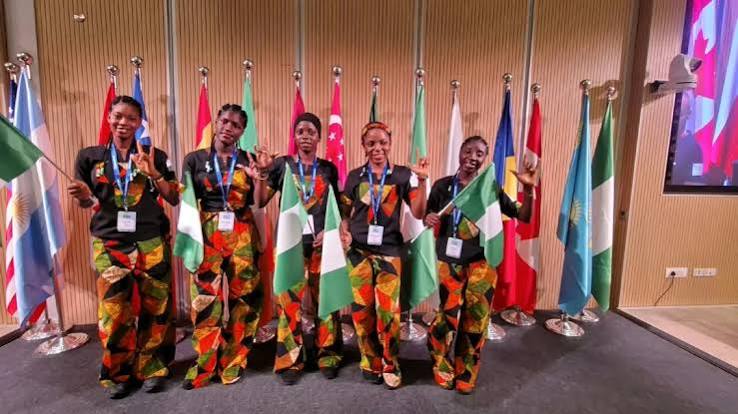
Five hearing-impaired secondary school students from Government Secondary School, Kuje, Abuja, have achieved recognition as international finalists at the 2026 Technovation Girls World Summit held in Bengaluru, India, for developing an artificial intelligence-enabled application that enhances accessibility to menstrual hygiene products.
According to a statement released on Monday by the Technology Beyond Disability Initiative, the team, identified as the STRIM Girls, showcased their solution, Saving Pad, following competition against numerous teams representing more than 160 countries worldwide.
The statement further noted that the team comprises Adegbile Teniola Vivian, Sulaiman Maryam Adenike Isah, Moses Joy, Ukpapi Theresa Uzepi and Yusuf Ruth, and received mentorship from the initiative.
The students created Saving Pad to assist students in identifying nearby sanitary pad banks, obtaining menstrual products and acquiring menstrual health information, with particular emphasis on addressing obstacles encountered by deaf girls and students with disabilities.
Regarding the rationale for their innovation, the girls articulated, "Because when a girl's period starts, the question should never be: 'What am I going to do?' It should be: 'I know where to go.'"
The application incorporates an interactive mapping system for identifying pad banks, a product request mechanism, menstrual cycle tracking functionality and educational resources on menstrual health. Additionally, it permits coordinators to oversee inventory levels and receive notifications when supplies become depleted.
In collaboration with the Deaf Women Aloud Initiative, the team has initiated a demonstration initiative across three specialized educational institutions in Abuja, with intentions to broaden implementation to primary healthcare facilities and underserved populations throughout the nation.
The system is additionally engineered to facilitate non-governmental organisations and donor entities in monitoring product distribution, assessing demand patterns and coordinating the replenishment of sanitary pad banks.
At the international conference, the girls illustrated the manner in which readily available technology and locally-driven community initiatives could serve to mitigate menstrual health concerns while simultaneously contributing to the advancement of the United Nations Sustainable Development Goals pertaining to health promotion and wellness, educational excellence, and collaborative partnerships.
Following their arrival back in Nigeria, the girls were received at the airport by a delegation headed by the Director-General and Chief Executive Officer of the Maryam Babangida National Centre for Women Development, Dr Adedayo Benjamins-Laniyi, accompanied by members of her executive management team.